
LENTICULAR PRINTING
HOW IT WORKS AND WHAT IT IS USED FOR
Lenticular printing is an advanced printing technology that uses lenticular plastic to create striking images with the illusion of movement, 3D effects, depth and visual changes depending on the viewing angle. Thanks to its high visual impact, it has become a widely used tool in advertising, marketing, packaging, merchandising and decoration.
In this article, we explain what lenticular printing is, how it works, its practical applications and prices.
LENTICULAR EFFECTS: TYPES, FUNCTIONING AND APPLICATIONS
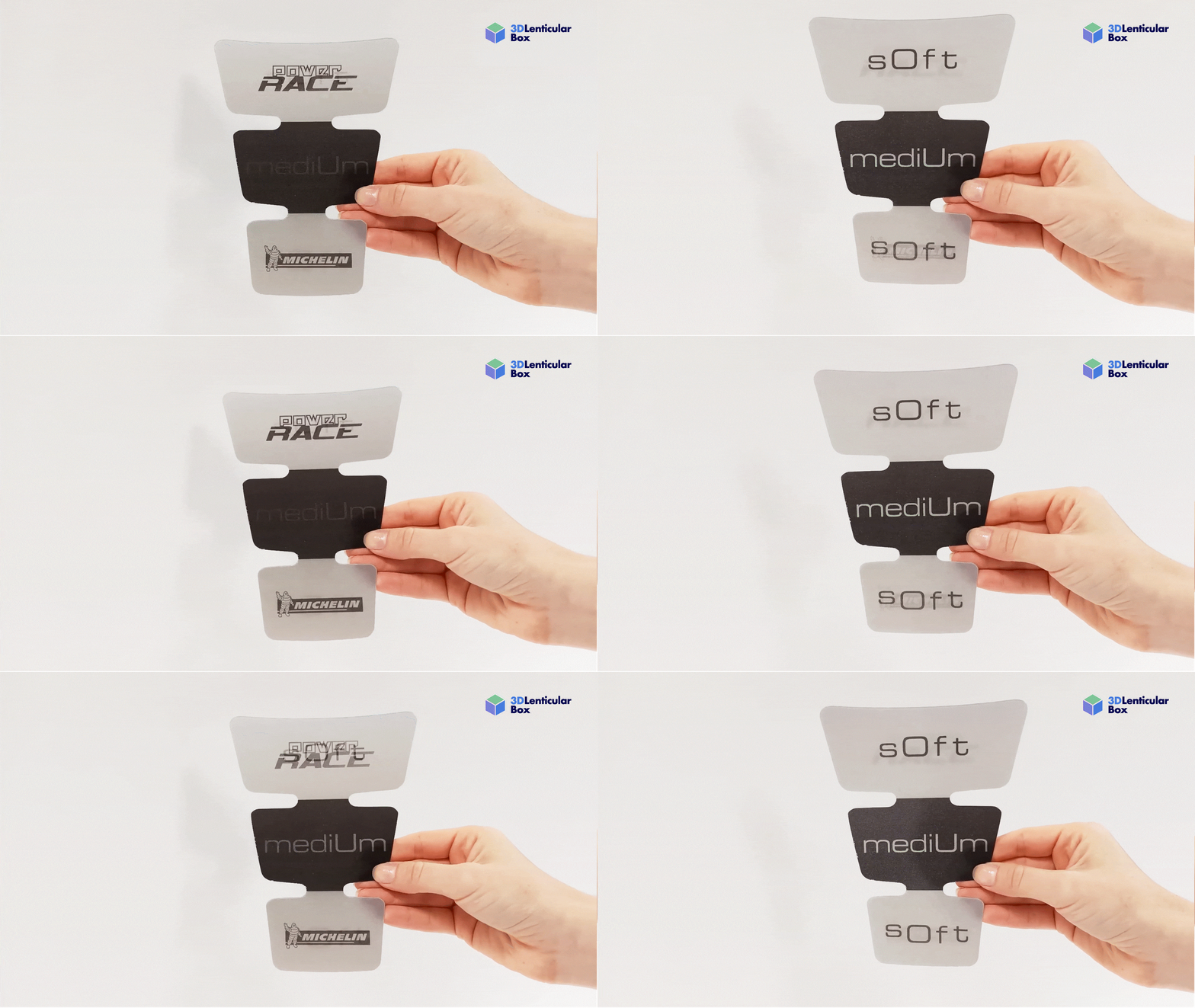
Lenticular printing consists of printing several interleaved images and placing them under a lenticular lens, formed by parallel micro-lenses. These lenses direct light at different angles, causing the viewer to see one image or another depending on their position.
Thanks to this technology, different lenticular effects can be achieved, such as:
These lenticular printing effects are used when you want to grab attention immediately.
TYPES OF LENTICULAR PRINTING
There are several effects depending on the desired visual result:
3D LENTICULAR EFFECT
3D lenticular printing creates a sense of depth without the need for special glasses. It is ideal for posters, covers and displays.
IMAGE CHANGE OR FLIP EFFECT
The lenticular or flip image effect shows two or more completely different images depending on the viewing angle. Widely used in advertising campaigns.
LENTICULAR MOTION EFFECT
It allows you to simulate movements or gestures, adding dynamism to the design.
ZOOM EFFECT
The image appears to move closer or further away when the stand is moved.
APPLICATIONS OF LENTICULAR PRINTING
One of the most common uses. It attracts attention in shop windows, billboards, bus shelters and promotional posters.
Ideal for highlighting products on shelves and standing out from the competition.
Postcards, cards, folders, bookmarks or even a personalised lenticular photo (in some catalogues it appears as a lenticular photo EUR0.96, depending on the supplier and print run).
Pictures and decorative elements with 3D lenticular images for modern interiors.
HOW TO MAKE CUSTOMISED LENTICULAR PRINTING STEP BY STEP
DEFINE THE EFFECT
Decide whether you need an image change/flip, movement, or 3D lenticular printing.
PREPARE THE IMAGES
The images must be of the same size, resolution and framing.
IMAGE COMBINATION
The images are combined using our specialised 3D Lenticular Box software to print lenticular correctly.
PRINTING AND ASSEMBLY
The design is printed, aligned with the lens and laminated with millimetre precision.
Among our services, we highlight our lenticular creation programme, integrated into an online lenticular printing platform, which allows you to create your lenticular pictures automatically, easily and intuitively.
ADVANTAGES OF LENTICULAR PRINTING FOR MARKETING
- Greater visual impact
- Increase brand recall
- Interaction without additional technology
- Ideal for premium campaigns
For these reasons, lenticular printing for marketing is increasingly in demand.
LENTICULAR PRINTING PRICES AND COSTS:
The cost of lenticular printing per unit depends on several factors:
- Size
- Lens type
- Number of images
- Print run
- Finishes
CONCLUSION: WHY CHOOSE LENTICULAR PRINTING?
Lenticular printing is a creative, striking and versatile solution for highlighting visual messages. Whether in advertising, packaging or decoration, its ability to generate movement and depth makes it a powerful visual communication tool.
If you are looking for professional-quality lenticular printing, we offer it in 3D Lenticular Box.
