What is lenticular printing?
Lenticular printing that creates 3D and flip effects without the need for glasses.
Lenticular printing is an advanced printing technique that uses special lenticular plastic to create images with flip, motion effects, and 3D depth. Unlike traditional prints, this technique creates a dynamic, glasses-free experience that transforms based on the viewer’s perspective.
This technique is used in advertising, personalised products, and creative projects, offering a visual impact that attracts attention and generates a dynamic and interactive visual experience. It is the ultimate tool for brands wanting to stand out through interactive design.

Lenticular Printing Effects: What Can You Achieve?
At 3DLenticularBox, we work with different customised lenticular effects, tailored to each project:
FLIP EFFECT (IMAGE CHANGE)
The flip lenticular effect combines two or more very different images that alternate depending on the viewing angle. It is one of the most widely used effects in advertising.
MOVEMENT EFFECT
A visual sequence is created from several images, simulating an animation.
3D EFFECT
The 3D effect allows the eye to perceive an image with volume, generating a lenticular 3D image with real depth, without the need for glasses.
ZOOM EFFECT
The image appears to move closer to or further away from the observer when it is moved.
TRANSFORMATION (MORPHING) EFFECT
One image gradually transforms into another.
POSITIVE - NEGATIVE EFFECT
Colours and contrasts change when the viewing angle varies.
HOW LENTICULAR PRINTING WORKS: STEP BY STEP
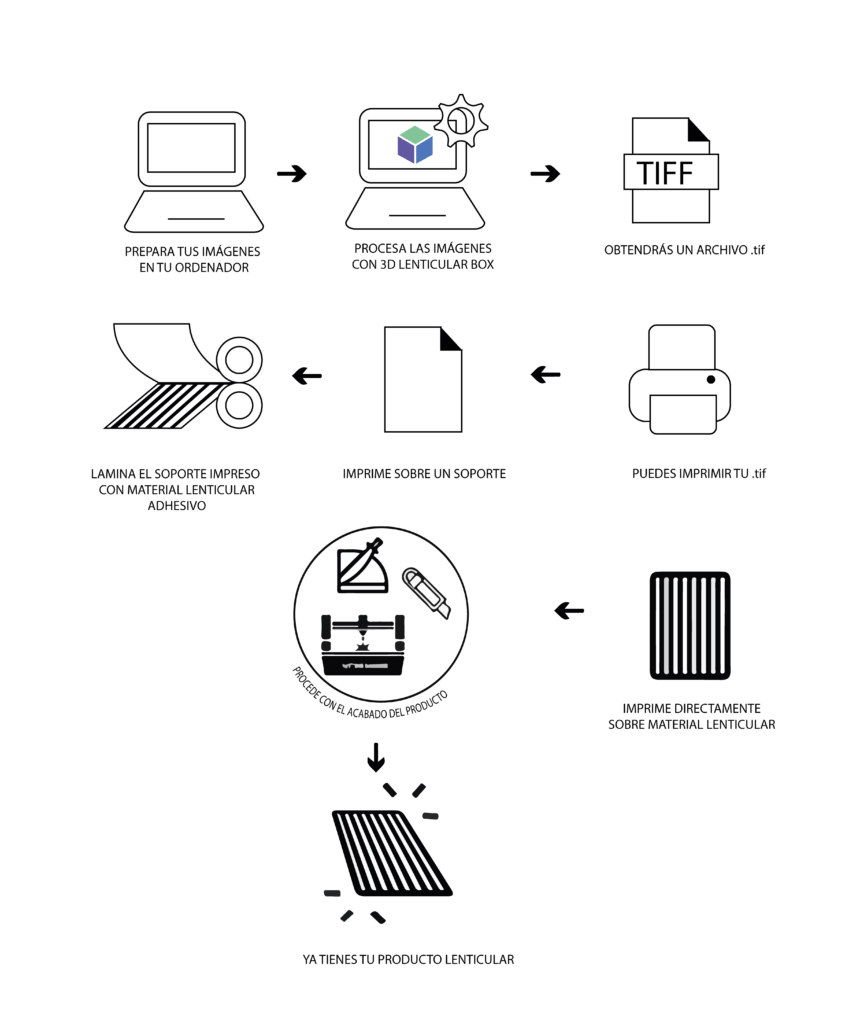
Step 1:Image Interlacing Process
The original images are divided into thin strips and digitally interwoven into a single file using professional lenticular software.
Step 2: Image printing
The interlaced image is printed:
- Directly onto the lenticular plastic (UV technology)
- Or on stable paper and then laminated with lenticular plastic.
Step 3: Lenticular visualization
The lenticular lens isolates each image strip and makes only one visible at a time, depending on the viewing angle.
How lenticular effects work: Lenticular lens
When the lenses are in place, each eye sees a different image. The brain merges both images and generates a sensation of three-dimensional depth, known as binocular disparity.
This principle is the basis of lenticular printing and the success of the lenticular effect in visual marketing.
We start with a sequence of frames, previously created with image editing software, to produce truly amazing and personalized creative designs.
We transform a static image into an interactive image that requires user participation.
INTERLACING OF IMAGES
The original images are divided into thin strips and digitally interwoven into a single file using professional lenticular software.
PRINTING
The interlaced image is printed:
- Directly onto lenticular plastic (UV technology)
- Or on stable paper and then laminated with lenticular plastic.
VISUALISATION
The lenticular lens isolates each image strip and makes only one visible at a time, depending on the viewing angle.
This principle is the basis of lenticular printing and the success of the lenticular effect in visual marketing.
how lenticular effects work
When the lenses are put on, each eye sees a different image. The brain merges both images and generates a sense of three-dimensional depth, known as binocular disparity.
We start with a sequence of frames, previously created in image editing applications, to produce truly amazing and personalised creative content.
We effectively convert a static image into an interactive image that requires user participation.
What software is required for lenticular printing?
Lenticular plastic and how to print lenticular correctly
- 3DLenticularBox lenticular software for creating any effect.
- 3D creation software when we want to work with volumetry.
- Synthetic or paper backing for printing the processed file when produced by lamination.
- Lenticular plastic:
TYPES OF LENTICULAR PLASTIC
◊ Adhesive: For lamination production.
◊ Non-adhesive: For direct printing on plastic using the smooth side of the material.
DIFFERENT TEXTURES
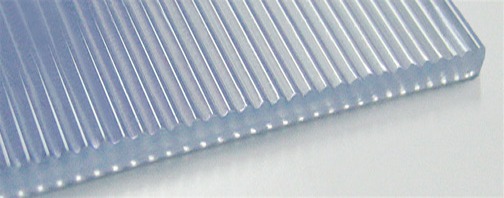
- One side contains aligned lenses, which is why it is called lenticular material.
- The other side is smooth, which is the side we print on or apply adhesive to in order to obtain material ready for lamination.
There is a wide variety of lenticular materials designed to create different applications and effects. Ideally, they should be used appropriately, taking into account the type of printing and the desired application.
Processing is the result of applying certain algorithms to different frames. Once processing is complete, an interlaced file is obtained which, together with the lenticular material, allows us to see the different effects.
Our professional software is designed to create all kinds of lenticular effects: flip, animation, zoom and 3D.
It is used and recommended by printing equipment manufacturers and professionals in the graphics industry.
How to make custom lenticular printing
Lenticular printing for advertising and marketing


Lenticular printing for advertising is one of the most effective tools for highlighting brands and products in:
LENTICULAR PRODUCTS
- Advertising posters
- POS advertising and displays
- Packaging
- Promotional displays
- Visual marketing actions
The flip lenticular effect combines two or more very different images that alternate depending on the viewing angle. It is one of the most widely used effects in advertising.
ADVANTAGES OF LENTICULAR PRINTING FOR MARKETING
- Grasps immediate attention
- Increase brand recall
- Differentiation from the competition
- High visual impact in physical spaces
LENTICULAR PRINTING TECHNIQUES ON POSTERS
Lenticular posters allow several messages to be integrated into a single image, optimising advertising space and increasing interaction with the viewer.
CUSTOMISED ONLINE LENTICULAR PRINTING
At 3DLenticularBox, we offer online lenticular printing tailored to each customer. We carry out customised lenticular printing, from the creative idea to the final product.
Over 30 years of experience
in Custom Lenticular Printing!
We have a long history dedicated to lenticular printing, collaborating on projects, each one more spectacular than the last, and offering the best quality in Europe over the years.
